Is your business on course?

How’s your business doing? Do you know what’s missing? Start to find your way by answering a few questions and using tools that are focused on your goals.

Available Information

Overcoming 5 Challenges to Keeping Your Head in Tough Times

What Goes Up Must Come Down

Sir Isaac Newton statue from Trinity Chapel. Photo by Harlequeen

Sir Isaac Newton proved it. David Clayton-Thomas wrote about it in the “Spinning Wheel” song. BS&T (Blood, Sweat & Tears) and Dame Shirley Bassey covered it in their albums.

Songwriter & singer Dame Shirley Bassey

How many ups and downs has your business experienced? Since we started our business, we have been through seven ups and downs – oil, banking, real estate, savings and loans, dot.com, Wall Street, and now real estate again. It has caused us to refine and redefine our business at least that many times.

If it’s a part life, it does not make sense just to try to survive this one because another wave is coming. If you own a business, the wave that could take you under could be something global like this “Great Recession” or something unique to you and your business. So be watchful; be prepared.

At the Business Success Center, we have identified five potential challenge areas that are always out there:

1. Economic

2. Environmental

3. Political

4. Social

5. Technological

What’s happening now? We are being hit by all of these all at once or so it seems.

What are people doing? Some are giving up and calling it quits. Some are digging in and just trying to survive  —  to just be able to “stay” in business. The successful ones are looking for ways to thrive.

What do you choose? Give up, give in, or stay in?

Keeping Your Head

Rudyard Kipling wrote his poem “If” in 1895 but it was not published until 1910. It’s a litany of actions to take to become a man (or woman). I think it’s also a useful guide on how to have a successful business no matter what is happening in the world outside or inside.

So how do you keep going when others are losing their way and people are blaming you?

It starts with confidence. This makes sense. After all, confidence in you (your product and service solutions, your staff, and how you do things) is the prime reason someone decides to buy something from you. No confidence, no sale — end of story.*

Step One: keep your head no matter what others are doing. Don’t just be confident you can survive, envision yourself as thriving. Pass on this confidence in your ability and skill to overcome any challenge that comes your way. Be confident in staff and customers, too. Confidence is contagious; spread it around.

Can you trust, wait, dream, think?

People buy from you because they trust you will provide them with the level of quality, service and selection they expect. Because you give them what they want not just what they need, they’re willing to pay your price and be glad it’s not more.

Owners who thrive in tough times are what authors Albert Bernstein and Sydney Rozen describe as “Believers” in one of my favorite books, Neanderthals at Work. It is an oldie but a goodie. (Buy it from your favorite local independent bookstore but they will have to order it.) This term does not have to do with a religious faith but in the thought that some people believe there is order, rules that matter and following those will make you successful and proud of it.

How do you demonstrate this?

You trust in yourself. You are willing to wait and see what happens. You think and plan ahead because the world turns and the best will rise again. You dream big and take actions that are counter intuitive to those who are quitters or just survivors.

What do you do, Little Red Hen? While Chicken Little** is saying the sky is falling, do you get out there and “Just Do It” ? Do you keep thinking how to work smarter not harder?

Here are some good “Thriver” choices. Dreaming, thinking and trusting are required.

1. You don’t cut prices or quality. You do contain your costs by setting up processes and systems that make you more effective and efficient. You may even raise your prices and get a better grade of customers.

2. You spend more on marketing. But you do it more efficiently. And, you do seek out alliances with other like-minded businesses and organizations.

3. You don’t cut back on staff. But you do get rid of the dead wood or at least rearrange that wood to light them up and get a roaring fire going instead of just fizzling out.

4. You become more selective in your customers. You go for the platinum and gold customers™ and dump the lead, concrete, and radio active waste customers™.

Risk Takers

“If you can make one heap of all your winnings
And risk it all on one turn of pitch-and-toss,
And lose, and start again at your beginnings
And never breath a word about your loss;”
(From “If” by Rudyard Kipling)

Banks, the government and non business owners think those of us who own small businesses are too volatile, too much of a risk taker. Just plain crazy.

I can tell you in working with owners of product and service businesses from accounting firms to zoos, we are the most risk adverse group on the planet. Any risk we are willing to take only happens after we have examined the other options and trust we can take an “informed leap of faith”.

If we guess wrong, then we usually start again. You can do that relatively easily in the US and even easier in Texas that is famous for being a “boom and bust state”.

In many parts of the world you “lose face” or even your life if you close your doors. By the way, even in tough times, most small business do not “fail” (close due to nonpayment of bills). They close the doors because the owners give up. They lose their dream, their trust and confidence in themselves, and their will to go on.

In the end, it’s your choice

As Kipling says,

“If you can meet with Triumph and Disaster
And treat those two impostors just the same;”

And

“Or watch the things you gave your life to, broken,
And stoop and build’em up with worn-out tools;”

And

“If you can force your heart and nerve and sinew
To serve your turn long after they are gone,
And so hold on when there is nothing in you
Except the Will which says to them: “Hold on!”

“Yours is the Earth and everything that’s in it,
And — which is more — you’ll be a Man, my son!”

You WILL always be a thriver, not just a survivor.

Author’s Notes:

*In experiments, researchers found they could influence the education outcome by telling the teacher ahead of time that a student was bad or good. Confidence does have consequences good and bad. We are talking here about honestly feeling positive about what you do for customers, your community, and others who count on you.

**If you are interested, the Chicken Licken or Chicken Little story comes from the Jataka Tales of Buddhist folklore not Aesop’s Fables and Little Red Hen is most likely a Russian folktale. I am confident that you will impress others with these bits of trivia and be well on your way to a more successful you.

Here’s to your long lasting success!

How do you thrive in tough times? Share your experiences. They could help the rest of us when we need a little inspiration.

Being Able to Visualize is a Mixed Blessing

Posts can be very personal. This one is.

Visualizing the needs & concerns Egyptian small business owners, their families and their employees like this man. Photo by Julie Gomoll.

I have a friend, Rasha, who is from Egypt and who has family there. My thoughts are with her and the wonderful people I met through the eyes, words, and pictures of another friend, Julie Gomoll.

Sometimes we say, “I can’t imagine” what it’s like. But I think business owners and other creatives can imagine in huge detail.

And, that’s what makes being able to visualize a mixed blessing. I saw this during 911 and hurricanes Katrina and Rita. I see it again here. And, media aside, it’s not due just to what we see and hear on TV, radio, and the Internet.

Friday, I went to my favorite bakery, Upper Crust on 45th & Burnet in Austin. I love the food and I enjoy talking to the managers and staff. Over the years I have found that many of them have other creative outlets — usually music or art.

The goodies were as good usual things but staff just seemed a little off kilter. I asked a staff person who is an artist and musician about what I observed because I was concerned. He didn’t talk about Egypt or other problems in the world but he was sensing or visualizing something that took him off his usual game. I had never seen him this way. He asked me my advice. I was stumped. That’s partially what prompted this post.

I bring this up because if you are an owner you have to visualize how to build your business so that it is sustainable and profitable. That means you can visualize and have nightmares about what can happen to it. So, you can imagine what’s happening to those business owners who are living through this uproar. You can imagine their concern for the welfare of their families and their employees and their families.

That’s not to say that people should not speak up and try to get rid of dictatorial regimes. It’s a recognition that there is more than just simple empathy at work here. It can be almost a physical reaction because you can realistically imagine what’s happening.

I am also not saying that non-creatives don’t empathize or feel in these big events. They do. I have just observed that the more you can visualize, the more you get caught up in this. I may be wrong.

If you have creatives on your staff, they may be visualizing things, too. They may not verbalize it but they can be off balance, feel overwhelmed.

My advice, talk about it. You and they need an outlet. Don’t just dismiss it. Be prepared. If I am right, it will happen again the next time the world seems to be going up in flames.

Are you seeing this in your business? What are you doing to deal with this mixed blessing in yourself and your staff?

In the meantime, my heart and mind are with all the people of the Middle East.

Why Lefties Make Better Salespeople

Worth reading for more on lefties - good & bad


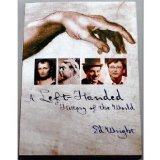
My brother gave me a copy of A Left-Handed History of the World by Ed Wright for Christmas.  As my husband, Daniel, said, that’s much better than a previous gift of 101 Uses for a Dead Cat by Simon Bond. Others found it amusing, as a cat lover, I did not.

I am left-handed. It was interesting to read about other prominent lefties. Some of my favorites include: Queen Victoria, Charlie Chaplin, Michelangelo, Leonardo daVinci, Madame Curie, Henry Ford, Ramses the Great, and Joan of Arc. Several US presidents (Reagan, Ford, George W. Bush, and Clinton) were on the left – when it comes to hands at least.

Lefties have been burned at the stake, made to use their right-hands, refused as marriage partners and basically abused. Being left means we have an extra step in our learning process; to adapt the right way to do something to our way. We are acutely aware of who we are and where we are.

Wright’s comments about characteristics that make lefties successful got me thinking. Do we make good salespeople? Are we better than our right-handed colleagues. I think maybe so.

Is it only because, as all lefties know, “we are in our right mind”? That’s part of it. But here are five other reasons suggested by Wright’s book. See if you agree.

  1. Good salespeople are willing to risk it all – a “Yes” or a “No”. Lefties are risk-takers. We are willing to keep on putting ourselves out front and center.
  2. Good salespeople are intuitive. They need to be able to cut through the mess and get to the core. Wright says those of us who are left-handed can read situations better and more closely. We often come up with unique solutions that surprise others. (Think of lefty Sir Isaac Newton, for instance, or battle strategist Alexander the Great who conquered the known world).
  3. Good salespeople are empathetic. They can put themselves in others shoes. They can make others feel more comfortable and that they really understand the situation. Those who are left-handed know what it’s like to be different and are used to being the outsider. Consider scissors, pens, ladles, etc. — all made the right-handed way. We want to be part of the “rights” but we can’t completely. So we are inclusive and try to bring people to us.
  4. Good salespeople can size up a situation quickly and adjust.  Wright refers to this strong left-handed trait as “Visual Spatial Ability”. They can take in the whole picture with a quick glance. He says it applies particularly in artistic, scientific, and mathematical applications. Got something complicated to sell?  Lefties will understand it first and be able to describe it to others.
  5. Good salespeople can make connections between things that at first glance seem miles apart. Lefties, Wright says, have lateral thinking. They can adapt and see a thing in terms of another. They think in metaphors. I can attest to that. Sometimes our leaps can blow a righty away. How can we think that way? Because we think in many ways all at the same time. This drives my partner crazy. I live in a world in which I don’t completely fit so I will make it fit.

Bad News Lefties

The news is not all good about lefties. We can also be hot-tempered, ambitious, solitary, iconocastic (change agents who love to destroy “the usual”) , want it our way (self taught as Wright says), experimental (“what if”, we say), and a fantasist (coming up with solutions that don’t exist within possibility at least right now).

Look at your salespeople. Who are the best ones? Bet at least 8% are left-handed. (Wikipedia says about 8-15% of the human population is left-handed.)

If your sales are down, hire a lefty. Then, stand back.

Are you a lefty, too? Do you agree?  Are you good at reading people and creating sales opportunities? I would love to hear from you. (Comments from right-handers as well as left-handers are welcome.)

How a lefty’s mind works

Musings on the author by this author:

  1. Is he left-handed?
  2. Is it odd for a man named “Wright” to be writing about the left? How did he feel about it?

The book is definitely worth a read. You may get other insights out of it, especially if you are left-handed.

10 Ways You Can Be a Platinum Customer™

I love Upper Crust Bakery on Burnet Road in Austin. Great birthday cakes, eclairs and great service. They always know what I want and make me feel special. A few weeks ago, one of their terrific staff told me I was a great customer. Wow!

That got me thinking. What can customers do to give great “business service”? This would help businesses have better sales and create more Platinum Customers™. It’s just what our economy needs: all of us to play a positive role and take responsibility.

It takes time and effort but there’s a huge payback for everyone. You can be that Platinum Customer™.  Are you up to the challenge?

  1. Be open with me. I am not the enemy. I won’t use the information to jerk you around. I view sales as an offer to a friend. The offer is that I have something that might prove to be a good opportunity for you. Tell me what I need to know so I can make you the best offer I can. That means BUDGET and timeline, too.
  2. Be respectful of my time. Things happen; you have changes in your life and business. Respect me enough to let me know as far in advance as you can. Let me know that you can’t come, will be late, aren’t prepared, etc.
  3. Don’t expect it tomorrow. If you want it tomorrow, give me what I need to do it right long enough in advance. If you can’t, understand why it costs more or it might need “tweaking” when there is more time. But more than that, I have put you ahead of other priorities so a “thank you” would be nice.
  4. Tell me first if you are dissatisfied. You are my quality control. I value that highly. If you must tweet about it or tell your friends, give me the opportunity to address the problem first. This is a relationship not a war. My job is to truly listen and hear what you say; then act.
  5. If you just want a price, don’t call me. Go to the web. My value to you as an independent business owner comes from my total solution and my experience in helping others successfully achieve their goals. Please remember that my price has to cover: wages, taxes that support our community, my overhead costs, reasonable profit to get through hard times, and contingency funds in case something goes wrong or you don’t or can’t pay. It’s not just about what it costs me out of pocket.
  6. Fulfill your obligations. I expect my Platinum Customer™ to put in some effort because after all it’s their money and their business. Work with me to make my solution work for you.
  7. If you come to me for advice, don’t brag about how much you know about the topic or try to prove I’m wrong.
  8. Don’t use your cell phone if you are talking to me or use it quickly and get back to business. My time is valuable, too.
  9. Ask me first. If you need something that I might be able to provide, see if I can. You are under no obligation to buy but I’ve invested time with you, so give me an opportunity to serve you.
  10. Make referrals without my asking you to but know whom to refer to me. I chose you as my client but I don’t choose everyone. What I have to offer is not right for everyone. I appreciate the referral but please don’t give your sister who is hard to work with.

What do you do to help provide great “business service”?

If you are a business owner and want to know how to identify Platinum Customers™, read my suggestions about how to create aPlatinum Customer Profile ™and see my slide presentation that I have given for several organizations.

Getting Real About Who’s a Small Business

I’ve said for years there’s a problem. The issue of the Bush tax cuts just points this out in spades.

I saw Keith Olbermann’s Countdown program, “Small in Name Only” on MSNBC on September 22, 2010, about the “kooky” (their word not mine) definition of small business. It isn’t weird, it’s just flexible as the Small Business Act intended it to be. Maybe it needs work. I certainly think so.

This is what the SBA (Small Business Administration) says on the FAQs page of their website. You can check me out on this.

“Size standards define the maximum size that a firm, including all of its affiliates, may be to participate in federal government programs that are reserved for small businesses. The Small Business Act states that in determining what constitutes a small business, the definition will vary from industry to industry to reflect industry differences accurately.”

It then goes on to say to read the Small Business Size Act. If you follow the link, you get this:

“The SBA defines a business concern as one that is organized for profit; has a place of business in the U.S.; operates primarily within the U.S. or makes a significant contribution to the U.S. economy through payment of taxes or use of American products, materials or labor; is independently owned and operated; and is not dominant in its field on a national basis. The business may be a sole proprietorship, partnership, corporation, or any other legal form.”

There’s part of my problem. The Countdown show maintains that when it comes to  taxes,  a small business designation is only for “pass through” entities (sole proprietorship, partnership, S corp) and then points out how ridiculous this is. But that statement about legal entity status does not pass the SBA test. Or, at least part of it.

The SBA goes on further to say:

These size standards apply to SBA’s financial assistance and to its other programs, as well as to Federal government procurement programs when there is a benefit available to qualifying as a small business concern.  Also, the Small Business Act states that unless specifically authorized by statute, no Federal department or agency may prescribe a size standard for categorizing a business concern as a small business concern, unless such proposed size standard meets certain criteria and is approved by the Administrator of SBA.”

The expert that Olbermann brought in to comment really didn’t give a full picture of how federal agencies, including the IRS, are supposed to define “small business”. So why was there no slide of it to give viewers that definition?

Why was no one at the IRS not asked to comment? Better theatre I guess.

Why didn’t the IRS want to comment? Have they screwed up in their definition of “small”? Probably not. Smart tax attorneys found a way to take advantage of that definition.  Other small business owners and I used to joke that if you had a business that was the smallest in your NAICS code, the government defined you as a small business. That would make Chrysler a small business.

Not the only time either that “small” has big consequences. It’s been proposed that venture firms that own part of “small business” be eligible for the really one and only government grant, the SBIR (Small Business Innovation Research Grant). Now, that is really weird and in my view and others it’s also totally unfair!

In other words, just because you say you are “small” does not by government standards say you are. Of course, these definitions refer to programs for small businesses including procurement and loan guarantee assistance. Shouldn’t a federal definition be the same across all areas of government including taxes? I always thought so or how can anyone keep up with being an on again off again small business.

Where is the IRS on all this? Nowhere to be seen. Odd. For years, the IRS director just around tax time would go on record saying that the regulators would be on the lookout for small businesses because we were all out to cheat the government. Maybe these men and women were thinking of the businesses like Bechtel and Price Waterhouse Coopers that were labeled by Olbermann as  “small businesses”. By whose definition? Be specific. Where are they getting their definition? Let’s see it!

I am not saying I am for reducing taxes for the wealthiest. I am saying check your facts before you get out the tar and feathers. I’ve been a moderator (for KUT radio’s nationally syndicated show “The Next 200 Years”)  and there are rules even for commentators.

If you would like to read more about the size standards and judge for yourself about who the heck people are talking about, here are some useful links.

And, if you don’t think that’s confusing enough, the states have their own definitions by statute. In Texas, a small business is defined in Vernon’s Civil Statutes as under 100 employees. That said, if you look just at the latest statistics on the number of firms in the Austin Metropolitan Statistical Area, there are 35,129 firms under 500 employees. About 880 of them have from 100-499 employees. That’s 2.51 % of that total; pretty close to the 3% people are yelling about. And, this percentage holds true in most MSAs where I can find numbers. (These particular numbers are provided by the nonpartisan LMCI division at the Texas Workforce Commission.)

Some of those 880 are probably making a lot than $250,000 in order to support the overhead of that number of employees. And, unlike the commentator would lead one to believe, I’ll bet they are not all Republicans. I could be wrong on that and I can’t exactly check. But, it would seem reasonable given the bigger small business owners I have met are not from just one party. (Some of their spouses have even served as Democrats in the legislature and elsewhere.)

What good can come out this mess? Maybe, the powers that be will get real and come up with a definition that actually and accurately defines who we small businesses really are. How about media people being a help to solve the problem instead of exploiting it. Yes, there are some who don’t quality for the term. Then change the tax laws and stop stomping on small business as a whole.

Finally, you never even talked to one of us to see our take on this issue of definition and taxes. Call me, Mr. Olbermann. I’ll talk to you about what it’s like to be a very small business owner who pays taxes, meets payroll, and provides for health insurance for staff for over 20 years.


The Networker Magazine Remembered: Overtime Article Reprised

Austin, Texas’ small business and entrepreneurial history is long and full. There were special support meetings called “Satellite Network Meetings” all over town and even in Round Rock long before there were Meetups and Bootstrap groups.

And, there was The Networker, a small monthly publication especially for women. From June 1980 to its last issue in August 1987, I wrote, managed or was its editor. We covered politics, interesting women, events around town, the arts, business, sports, education, healthcare, and jobs. We covered issues from the ERA to “Should women fear computers?” And, yes, that was the title of an article. We covered women magicians like Judy Wilkes and Valerie Cordell, early aviators like Pearle Ragsdale, truck racer Shawna Robinson, women firefighters and women at war. Young and old, of all colors, creeds, and backgrounds were included in our news.  We even did some interesting articles about men including Cactus Pryor and cartoonist Ben Sargent.

The Networker was originally a City project that came out of what I believe to be Austin’s  first networking event, the Austin Women’s Network Brunch, sponsored by the Austin Commission on Women (then called the Austin Commission on the Status of Women). The brunch was an outgrowth of the 1979 Women’s Conference.

We soon became a non-profit corporation and moved away from control of the City. The magazine’s slogan was “The Paper Texas Women Read”. And, they did. In its heyday, it had several thousand paid subscribers and  a circulation of 7000 readers without ever receiving any City funding.

In 1984, then mayor Ron Mullen declared July 17 as Networking Day and “called on all citizens to recognize the contributions made by The Networker in promoting equality of opportunity in the job market” and presented us with our first proclamation. Awesome!

Putting it together was an all volunteer effort except for the typesetter and printer. I feel very privileged to have worked with a very talented group of women including Meg Wilson, Nadea Gizelbach, Billie Passmore, Mary Margaret Navar, Lu Russell, Martha Hartzog, Beverly Scarborough, Brenda Trainor, Mary Bird Bowman, Leslie Geballe, Beverly Larkham, Theresa Feschek, Fancharm Gibson, Mary Wheeler, and Barbara Brown.  There were some great men associated with us as well including Austin historian Ed Van De Vort, Joe Stengel, Craig Meurer, and photographer Dan Diener.

But the most fun was working with my mother, Jane Dinsmoor. It was her fault I was there anyway because she suggested I write for The Networker. I did. The column was called “After Image”.

Then she suggested I become The Networker’s Managing Editor since I was such a good nag. She meant that sincerely and with great pride. So I did.  I must have done ok because I became the Editor. I can tell you The Networker gave me the best education into how Austin works and how to network.

Besides giving me motherly advice, she wrote a wonderful column called “Overtime” each month and “People” where she interviewed well known and less well known women including architect Judy Brown, international storyteller Helen Handley, Eleanor Richards (Gov. Ann Richards mother-in-law and politico herself), and scholar Dorothy Hartshorne. Much of the snail mail we got or the comments made to me in public were about her articles. I was very proud of her, too.

August 5th would have been her 92 birthday. With great affection, admiration and thanks, I want to reprise one of her best loved articles, “The Cockroach”. A “fitting” subject as she would say for summer in Texas. Enjoy.

If you have memories of those Satellite Meetings, The Networker or other activities that helped spur small business or entrepreneurial development in our area, please share it.

———————–

Overtime
by Jane Dinsmoor

from The Networker, Vol 2, Issue 1, January/February 1981

Wishful Thinking: A Pied Piper to get rid of cockroaches. Photo by bixentro.

In Austin it is now perfectly within the bounds of good manners to discuss the common roach. I’m glad. Silent emotional storms of that magnitude are the pits. True, whole generations of ladies lived their lives denying the existence of both diarrhea and roaches, but those ladies are known as forebearers. In the North one still refers to the critters as “Building Beetles. . .Water Bugs. . .not Roaches, you know.”

According to my dictionary, “roach” is short for “cockroach” which is “any one of a family of insects; especially a small brownish or yellowish species found in kitchens, around water pipes, etc.”

The only thing correct about that definition is the etc., and I need a new Austin-type dictionary. Actually a roach is any of a thundering herd of other similar insects. Their colors are best described as repellent roach brown, repellent roach black, etc. And smallish? The smallish-est you have to worry about weighs in at 15 pounds. You can tell a little one because it’s only carrying two sacks of potatoes.

But to continue. . .it is ridiculous to think that anyone ever went out looking for a roach! “Found,” indeed. They pop out of drains anytime anyone turns on the water; they pose majestically on toilet tanks; they stampede across the kitchen floor at night; they appear with the desert at any meal to which guests have been invited. Give me a quick-moving Southern guest who can stomp a roach off the rug and never spill the syllabub.

My dictionary also states that the word “cockroach” is an “alteration of the Spanish word ‘cucaracha’”. . .and what does that do to international relations? But there are also German cockroaches. My friend the exterminator told me so. We have had many, many, of these discussions over coffee as we waited for the fog to settle so we could count casualties. “Yoicks!” says he. “Yoicks!” says I. “I think it’s safe for you to have house guests now. . . if they come right away.”

He also told me you never get rid of roaches. . .just keep them at bay. I know what he means. They kept me at bay for the first three months I was in Austin. My greatest triumph came when, at the height of the battle, I lashed out, connected, and kicked a big one smack in the head!

Keep roaches at bay indeed! Light up the Tower! Give me my spray, my swatter, and my good right foot! I will overcome!

Photo link for bixentro.